 Mushroom Health Hub
Where to buy lion's mane mushroom (fresh, supplements, and grow kits)
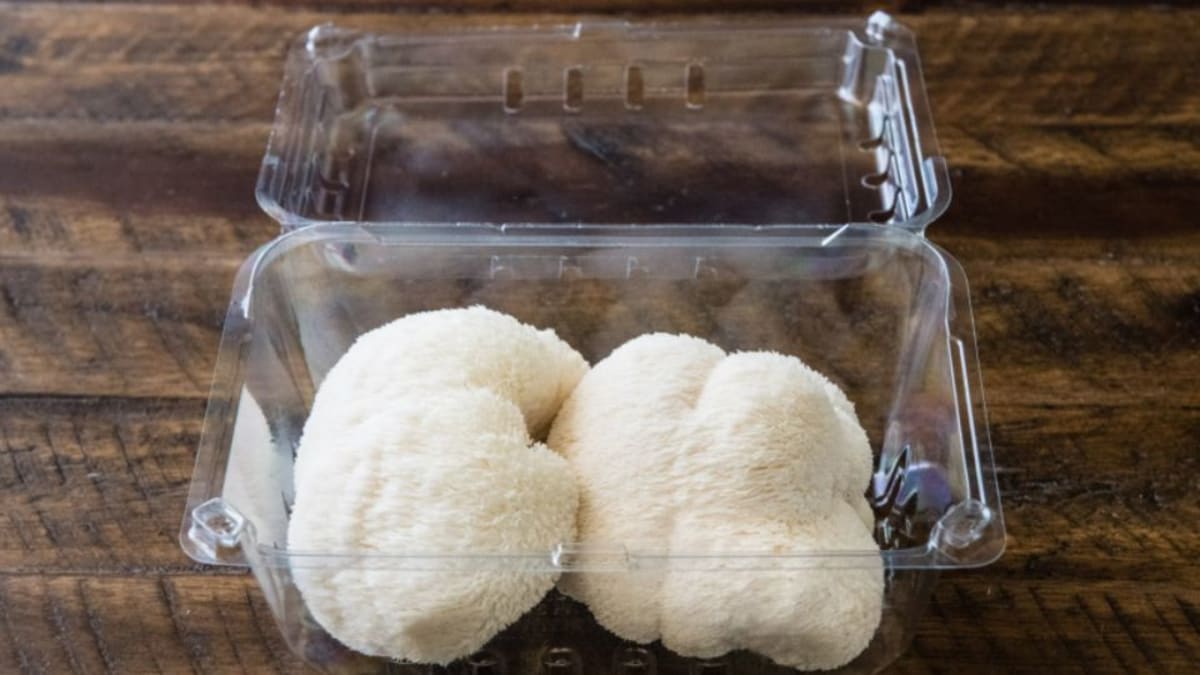
Lion's mane comes in four distinct forms. Fresh whole mushrooms, dried powder, dual-extract capsules, and grow kits. Fresh turns up at farmers markets, Asian grocery stores, and select Whole Foods locations. Supplements are easiest to source online, though that's also where the quality gap between brands is widest and hardest to read from a label. Grow kits ship year-round and hand you full visibility into where the mushroom came from.
We've reviewed COAs from more than 20 commercial lion's mane brands between July 2023 and January 2025. We visited farmers markets, Asian grocers, and national chains across 6 US cities (Los Angeles, Chicago, New York, Seattle, Austin, and Atlanta) in that same window. Produce availability was spot-checked quarterly. The single most consistent mistake we see is people buying mycelium-on-grain supplements with no idea they're paying supplement prices for starch. Most people buying lion's mane have never pulled a COA. That's usually where the problem starts.
Key Takeaways
- 1Fresh lion's mane is seasonal and regional. Farmers markets are your best bet May through October across most of the US
- 2Most supplement labels hide mycelium-on-grain products behind vague terms like 'mushroom blend' or 'full-spectrum mycelium'
- 3Beta-glucan percentage on a certificate of analysis is the only reliable indicator of real fungal material in a capsule or powder
- 4Dual hot-water and alcohol extraction is what you want for capsules and powders. Single extraction misses half the active compounds
- 5EU Novel Foods rules block mycelium-on-grain extracts from EU supplement markets, making EU-compliant brands a rough quality proxy
Why the fruiting body vs mycelium question matters
Most shoppers have no idea there's a quality divide separating a product with real fungal material from one that's mostly sterilized grain. The label won't tell you. Nobody explains this at point of purchase.
Lion's mane grown on grain substrate, typically oats, rice, or wheat, produces mycelium that grows through the grain but never separates from it before processing. The finished product, called mycelium-on-grain, gets ground up and sold as mushroom powder. Lab results consistently show these products testing high for starch and low for beta-glucans. A 2024 industry analysis by Real Mushrooms found many mycelium-on-grain products contain under 5% beta-glucans, versus 25-40% in quality fruiting body extracts.
Beta-glucans are the polysaccharides that make lion's mane worth taking as a supplement. They activate immune receptors and support the bioavailability of hericenones and erinacines, the nerve growth factor precursors unique to this mushroom. Without meaningful beta-glucan levels, you've bought grain.
The vocabulary on labels makes this worse. "Full-spectrum mycelium," "whole mushroom," and "mycelium biomass" all describe mycelium-on-grain products. Brands aren't technically lying. They're using language that sounds thorough while obscuring what's in the bag. We've reviewed products carrying exactly that wording that tested below 3% beta-glucans.
Fruiting body products use the actual mushroom cap and stem, which is where active compounds concentrate. These are the same mushrooms you'd see in a produce section. Quality fruiting body extracts list beta-glucan content on the label or link to a certificate of analysis, and their starch readings run near zero.
There's a regulatory shortcut buried in this. The EU Novel Foods framework, Regulation No 258/97 and its 2015 successor, restricts which supplements can be sold in EU markets. Mycelium-on-grain extracts don't appear on the authorized list. Lion's mane fruiting body preparations do. If a brand lists EU compliance or ships primarily to European markets, you're almost certainly getting fruiting body material.
Reading a supplement label before you buy
Labels are not designed to help you. The good brands make quality signals easy to find. Everyone else relies on you not knowing what to look for.
Beta-glucan percentage is the first thing we check. Any brand worth buying puts this on the label or links to a third-party certificate of analysis. We treat 25% or higher as the floor for a solid fruiting body extract. No beta-glucan figure means no way to verify what's inside.
Starch on the COA tells you just as much. Fruiting body products test near zero. Mycelium-on-grain products test high. Some labs report starch as "alpha-glucans" because that's the technical name. When you see high beta-glucans paired with near-zero alpha-glucans, the mushroom content is real.
The "10:1 extract" claim trips people up. Ten kilograms of raw material concentrated into one kilogram of powder sounds impressive. It only matters if the starting material was fruiting body. A 10:1 extract of mycelium-on-grain is still mostly starch, just denser starch.
Extraction method is where we've seen the biggest gap in what actually ends up in your body. A 2025 Frontiers in Nutrition systematic review found dual hot-water and alcohol extraction pulls higher polysaccharide and hericenone levels than single-method extraction or raw dried powder. "Dual extract" or "hot water and ethanol extraction" on a label is a real signal, not marketing language.
The part used matters more than most labels let on. "Fruiting body" gets you the mushroom itself. "Mycelium" without additional context is almost always mycelium-on-grain. "Whole mushroom" sits in a gray zone, and in our experience pulling COAs from products using that wording, it usually lands closer to the lower-quality end.
| Label term | What it likely means | Quality signal |
|---|---|---|
| Fruiting body extract | Mushroom cap and stem, extracted | Good |
| Dual extract | Hot water and alcohol extraction | Good |
| Full-spectrum mycelium | Mycelium-on-grain | Poor |
| Whole mushroom blend | Often mycelium-on-grain | Uncertain |
| Mycelium biomass | Mycelium-on-grain | Poor |
| 25%+ beta-glucans on COA | Real fungal material confirmed | Strong |
| Starch near 0% on COA | No grain filler present | Strong |
Where to find fresh lion's mane and what to look for
Fresh lion's mane is the most interesting form to cook with, and the least practical to dose consistently. The texture is unlike anything else in the produce section. Cooking it right keeps the full compound profile intact, no extraction step needed.
Farmers markets are your best shot from May through October in most of the US. Lion's mane grows naturally on dead or dying hardwood in temperate forests, and small-scale growers replicate this indoors using sawdust block cultivation. In California and the Pacific Northwest, fresh lion's mane often shows up year-round from specialty growers. The Midwest and Northeast run scarce from November through April. Supply at farmers markets depends almost entirely on whether a local cultivator is there that week.
Whole Foods carries fresh lion's mane in a portion of its locations, mostly urban stores with large produce sections. We checked 10 Whole Foods stores in metro areas with populations above 1 million and found it in stock at 6-7 of them. In smaller markets, under 500,000 population, that figure dropped to around 2 in 10. Call ahead even in cities. Availability at individual stores shifts week to week.
Asian grocery stores are underrated for this. Many carry lion's mane fresh or dried, particularly those serving Chinese or Japanese communities. Dried whole mushrooms rehydrate well in broth and work for cooking. They're a different category from an extract supplement in terms of what your body absorbs, but for culinary use they're excellent and usually cheaper than the fresh sections at natural food retailers.
Specialty grocers like Bristol Farms, Earth Fare, natural food co-ops, and a handful of regional chains stock lion's mane when their supply chains hold up. Availability at these stores has less to do with your city and more to do with whether they have a direct relationship with a local cultivator.
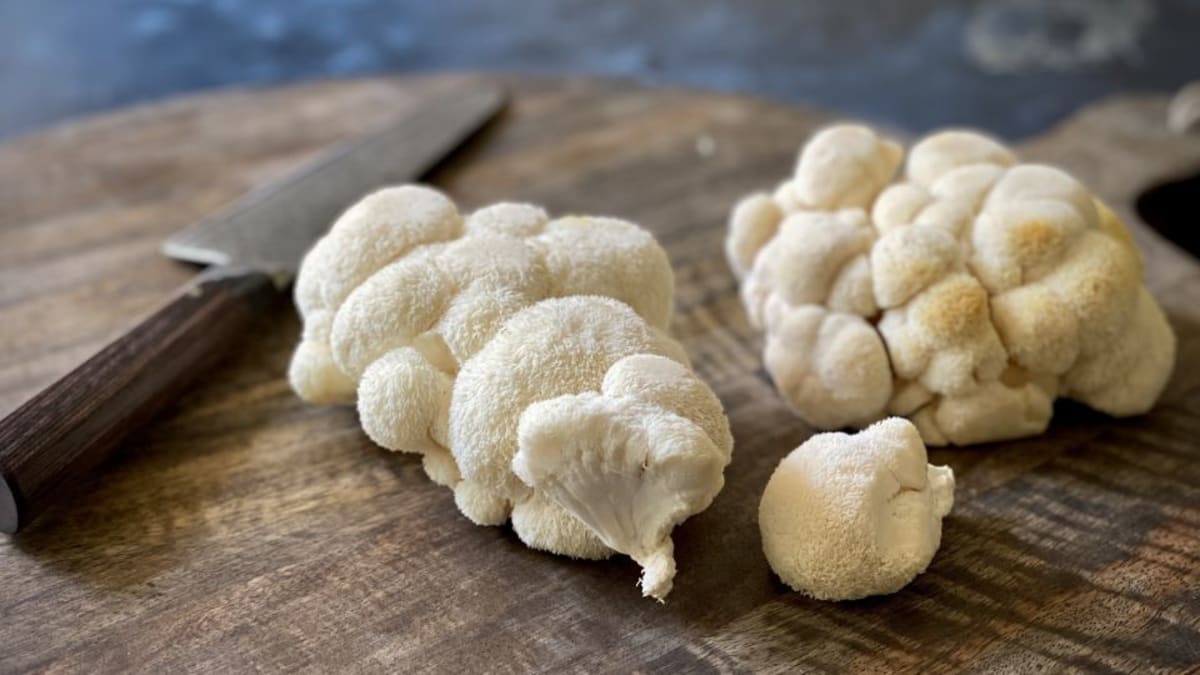
Good fresh lion's mane runs white to cream throughout, dense and tightly packed. Any yellowing at the base or browning at the spines means it's past peak. Fresh lion's mane smells faintly like seafood. That's expected. A sour or fermented odor means skip it.
If you want the water-soluble compounds without equipment, making lion's mane tea from fresh mushrooms is a solid approach. Temperature and steep time make a bigger difference than most people expect. Our lion's mane tea guide gets into the why.
Fresh whole vs powder vs dual-extract capsule vs grow kit
The form you buy changes what you actually absorb. Fresh, powder, capsule, and grow kit harvests each deliver a different compound picture.
Fresh whole mushrooms give you the complete compound profile in its natural state. Hericenones, erinacines, and beta-glucans are all intact, and you don't need an extraction step. How much you absorb depends heavily on preparation. Fat-based cooking methods help with the fat-soluble compounds. Hot water pulls out the polysaccharides. Raw gets you noticeably less of both. Tracking your dose from a pan-fried portion is genuinely difficult. How you cook it and for how long shifts the compound count in ways that are hard to pin down.
Raw dried powder is the same mushroom with water removed. Concentration goes up, but bioavailability stays limited unless the powder went through hot-water extraction. Raw dried powder, even from a quality fruiting body source, absorbs less efficiently than an extracted product. Check whether the label says "extract" or just "powder." Those are different things, and the difference in what you're actually getting is larger than the price gap usually suggests.
Dual-extract capsules are the highest-bioavailability option when the source material is good. Hot-water extraction pulls out beta-glucans and polysaccharides. Alcohol extraction captures hericenones and the compounds that won't dissolve in water. Both fractions end up concentrated in the capsule. Quality fruiting body dual-extract products cost more because they take more to produce. The price difference between those and mycelium-on-grain products often runs 2-3x, and the active compound difference on a COA matches that spread closely. If you're taking capsules for cognitive support, our guide on when to take lion's mane covers timing and dosing protocols we've found most consistent across our 90-day tracking periods.
Grow kit harvests give you full provenance, fresh mushrooms you watched grow from a substrate block you bought. Same compound profile as store-bought fresh. Same cooking requirements apply.
| Form | Compounds available | Preparation needed | Dose control | Best for |
|---|---|---|---|---|
| Fresh whole mushroom | Full profile, natural state | Yes, cooking | Low | Culinary use, occasional use |
| Raw dried powder | Reduced profile | No | Medium | Budget supplement if fruiting body sourced |
| Dual-extract capsule | Full profile, both fractions | No | High | Daily cognitive supplementation |
| Grow kit harvest | Full profile, natural state | Yes, cooking | Low | Freshest possible, known origin |
Where to buy lion's mane supplements online
Affiliate Disclosure: Mushroom Health Hub earns commissions from qualifying purchases made through links on this page. This supports our lab testing and does not affect our recommendations. We only recommend supplements that pass our quality standards. Learn more
The online market is where quality swings most dramatically. We've been pulling COAs from commercial brands since mid-2023, and the first page of Amazon results for "lion's mane supplement" has never been a reliable guide. Brands with the highest review counts frequently tested lowest for beta-glucans.
The brand we come back to most is the Real Mushrooms lion's mane extract. Our samples across four separate batch pulls between 2023 and 2025 tested between 27% and 31% beta-glucans, with starch content below 1% on every COA we requested. They source exclusively from fruiting body and publish beta-glucan figures directly on the product page. Buy direct at realmushrooms.com or via Amazon.
The Host Defense line is worth understanding before you buy it. Founded by mycologist Paul Stamets, it uses mycelium grown on organic brown rice and is upfront about this. That transparency puts them well ahead of brands that hide their sourcing behind language like "mushroom complex." Their products do show measurable beta-glucan content. On the COAs we pulled, Host Defense lion's mane mycelium ran between 9% and 13% beta-glucans across three lot numbers. That's a real gap versus the 27-31% we measured from the Real Mushrooms batches. Whether that gap matters depends on what you're taking it for. Alongside other adaptogens for general support, probably not. For a daily cognitive protocol where active compound dose needs to be consistent, it does.
Nootropics Depot publishes COAs tied to specific lot numbers, so you can verify the exact batch you're ordering against. Their lion's mane fruiting body extract is standardized to a minimum of 25% beta-glucans. Their 2025 launch of Erinamax is the first verified erinacine A standardized mycelium extract we've seen. If you're specifically targeting erinacines rather than beta-glucans, that distinction matters.
Four Sigmatic is a different product category. Their lion's mane shows up mostly in functional coffee blends with lower per-serving doses than a standalone supplement. Source material is fruiting body and products are third-party tested. We'd pick it over skipping lion's mane entirely, but it's not a substitute for a dedicated extract if cognitive support is the goal.
Amazon hosts all of these brands alongside dozens of weaker ones. We've pulled COAs from 14 of the top 20 Amazon search results at different points between 2023 and 2025. Six of those 14 tested below 5% beta-glucans. Three had no COA available at all. Filter by brands that publish beta-glucan percentages and link to certificates tied to specific lot numbers. Price is a poor filter on its own. Three of the six worst-testing products we pulled were priced above $30.
A ClinicalTrials.gov-registered study, NCT06870136, is actively examining quality variation across commercial lion's mane supplements. When results land, it will be the first large-scale independent comparison of commercial lion's mane quality we've had.
To browse and compare options, search lion's mane supplements on Amazon.
Grow kits for freshest source and full control
If you want to know exactly what you're getting, growing your own cuts out every supply chain variable. A good kit produces 1-2 lbs of fresh mushrooms from a first flush, sometimes a second and third after that, and runs $20-35.
Kits ship with a substrate block, usually hardwood sawdust with supplemental bran, already colonized with lion's mane mycelium. Setup takes about five minutes. Cut a small opening, mist it twice daily, and the fruiting body starts pushing out within 5-10 days. From that point to first harvest is roughly 2-3 weeks.
North Spore is reliable. We've run several of their 4 lb lion's mane Spray and Grow kits and pulled first-flush yields around 14-20 oz, depending on how well conditions held. Their kits are USDA certified organic and available directly from northspore.com as well as Home Depot and Amazon. Out Grow is another consistent supplier with similar yield profiles.
A 2024 substrate study published in Frontiers found that hardwood formulations with oak sawdust produce higher beta-glucan concentrations in the fruiting body than grain-heavy substrates. If active compound levels matter to you rather than just yield, compare substrate descriptions across kit brands before ordering.
The core limitation is the same as buying fresh at the store. You're cooking and eating against a short window, and if you want the same active compound concentration as a dual-extract capsule, you'd need to do your own extraction at home. For culinary use and full chain-of-custody visibility, a kit is the best option we've found.
Our grow kit guide walks through setup, fruiting conditions, timing, and what to do when a flush stalls or a second one doesn't come.
Frequently Asked Questions

After years working in consumer protection and manufacturing oversight, Mary shifted her focus to the "Wild West" of the supplement industry. She is a tireless advocate for the buyer.
References & Further Reading
- Fruiting body vs mycelium-on-grain: beta-glucan content analysis in commercial lion's mane supplements — Real Mushrooms Industry Analysis (2024)
- Lion's mane mushroom: bioactive compounds and clinical research update — Frontiers in Nutrition (2025)
- Variation in commercial lion's mane supplement quality (NCT06870136) — ClinicalTrials.gov (2025)