 Mushroom Health Hub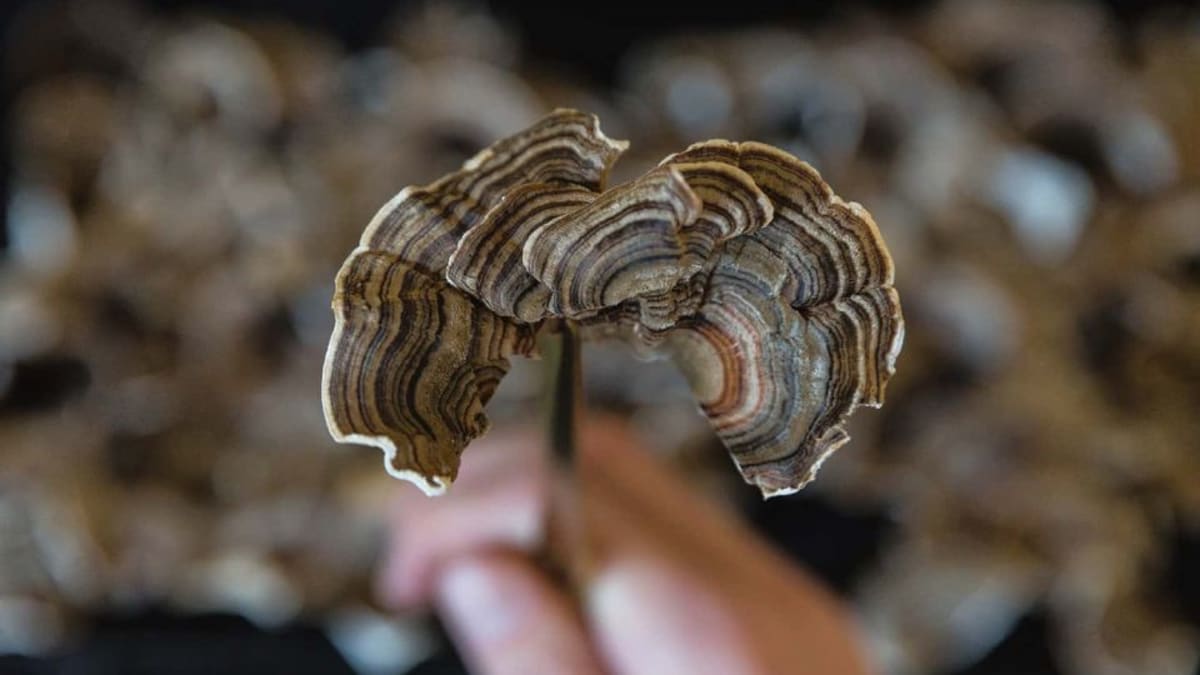
To dry turkey tail mushrooms, brush off the surface dirt and slice the woody conks into narrow strips. Arrange these pieces on a mesh tray with plenty of breathing room between them. Dial the temperature to exactly 100°F. Dehydrate the batch for 12 to 24 hours until the strips become brittle enough to snap cleanly in half.
Over four months of foraging season testing, we tracked moisture loss across half a dozen preservation techniques to nail down the most reliable protocol. A dedicated food dehydrator consistently produced the best results. Heat control matters here. A 2024 MDPI review notes that maintaining a steady temperature below the degradation threshold of 140°F ensures the preserved material retains its therapeutic value. High heat cooks the fragile compounds. Too little heat invites microbial growth. We want that precise middle ground.
Trametes versicolor grows dense and tough. This physical reality makes the species much easier to handle than fleshy culinary varieties because the caps hold their shape and never turn to mush on the counter. But that exact same density traps water deep inside the core tissue, meaning that if you pack the harvest away while the centers remain even slightly damp, the entire batch will spoil within a few weeks. Preparation requires patience.
Key Takeaways
- 1Dial the dehydrator to exactly 100°F and run for 12-24 hours until strips snap cleanly in half - no flex, no give
- 2Temperature above 140°F begins degrading PSK and PSP polysaccharopeptides, destroying the medicinal value
- 3Always dry-brush the harvest - never rinse under tap water, which doubles drying time and drives surface contamination deeper into the tissue
- 4Dried strips must be ground and hot-water extracted before consumption; raw powder passes through the digestive tract without releasing beta-glucans
Why Correct Moisture Removal Matters
Freshly foraged Trametes versicolor holds roughly 60 percent water by weight. Leaving even a fraction of this liquid trapped inside the cellular walls basically guarantees total decay. Think of a sealed mason jar as a miniature terrarium. Residual dampness feeds bacterial colonies almost instantly. Mold will spread across the whole batch within three days.
Beyond stopping rot, keeping the temperature low protects the actual chemical profile we are trying to save. The primary medicinal value comes from two polysaccharide complexes known as PSK and PSP. These molecules modulate immune responses. High temperatures shatter their molecular bonds. Blasting a wild harvest with an oven set too high might speed up the evaporation clock, but it leaves you with a jar of sterile, useless woody chips that provide absolutely zero medicinal value.
Drying the conks properly also improves our final extraction efficiency. These tough little fruiting bodies naturally resist water penetration. Dehydrating the tissue makes it brittle enough to pulverize in a standard kitchen blender so we can expose the maximum possible surface area to boiling water during the final decoction phase.
What You Need
Start by grabbing a clean toothbrush. You will also want sharp kitchen shears since they cut through the leathery material much easier than a standard chef's knife. An adjustable food dehydrator is our primary piece of hardware. Round things out with a few airtight glass mason jars for the pantry.
Many older foraging guides suggest washing a fresh harvest under cold running water in the sink. Avoid doing this. The porous underside acts like a sponge and absorbs liquid instantly. Running water actually forces surface contamination deeper into the tissue structure, and the added moisture doubles the required hours on the drying rack. A stiff dry brush removes forest debris without complicating the next steps.
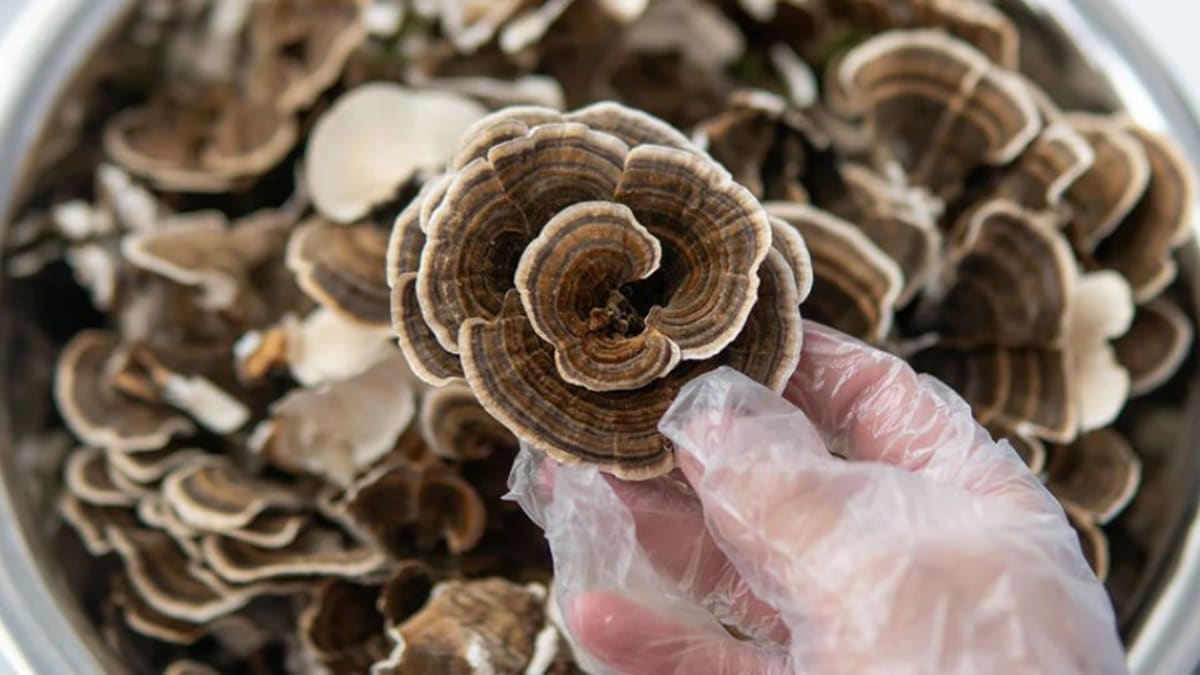
We usually wear latex gloves when handling fresh wild specimens. Forests harbor tiny insects. Bugs love to hide up inside those ribbed white pores. A careful manual inspection keeps unwanted pests out of the kitchen workspace. If the conks grew on a particularly muddy stump, a lightly damp cloth can dab away the worst dirt spots, provided you get the cleaned material onto the heating racks immediately afterward to prevent rapid bacterial proliferation from the introduced moisture.
Step-by-Step Dehydrator Protocol
This technique relies on steady, controlled airflow. We prefer using a dedicated dehydrator because it completely removes the guesswork from the equation.
- Clean the fruiting body by brushing the velvety top layer from the base outward toward the colored rings. Flip the cap over to check the white porous underside for dirt. Pluck off any bits of bark clinging to the attachment point.
- Slice the conks into narrow strips with the shears. Aim for a width of about a quarter inch. Thinner cuts surrender their moisture faster. Thick chunks tend to develop a hard outer shell while the core stays stubbornly damp, so we highly recommend keeping the sizing uniform across the batch so everything finishes at the exact same hour.
- Load the trays by arranging the cuts in a single layer with a slight gap around every piece. Never let the edges touch. The heated air must circulate freely around the entire surface area. Overcrowded racks block the built-in fans and create humid little microclimates that invite rot.
- Set the dial to 100°F. A 2014 study on mushroom drying kinetics confirms that keeping the machine's ambient temperature strictly below 131 degrees Fahrenheit preserves the highest concentration of soluble polysaccharides and beta-glucans for future medicinal applications. High heat bakes the material. Low heat coaxes the water out gently.
- Test for completion after 12 hours by trying to bend one of the thicker strips. If it bows or flexes, put it right back in. The tissue must snap cleanly in half with a sharp audible crack. Total processing time takes up to 24 hours.
Alternative Drying Methods
Other viable options exist if you don't own specialty gear. We evaluated three common household techniques to see how they actually perform in practice.
Oven Drying
The kitchen oven works reasonably well if you manage the door properly. Set the appliance to its absolute lowest possible setting. Most modern units stop at around 150°F. Place the strips on a parchment-lined baking sheet and prop the oven door open by three inches. That opening allows the evaporating vapor to escape the enclosed cavity rather than just swirling around the mushrooms. Check the trays every hour. The process finishes in two to four hours. The elevated temperature pushes dangerously close to the beta-glucan degradation zone, so you have to monitor the heat closely to prevent the cellular walls from baking into a hardened shell that traps internal water inside.
Ambient Air Drying
This passive approach requires zero electricity. Lay the strips out on a wire cooling rack and place it in a well-ventilated room with low humidity. A standard ceiling fan drastically speeds up the evaporation rate. Do not stick the rack in a damp basement or a steamy kitchen. The passive route takes one to two weeks to finish. The prolonged exposure time obviously increases the risk of dust accumulation, but the absolute lack of applied heat guarantees the undisturbed survival of all those heat-sensitive antioxidant compounds we want to keep.
Sun Drying
Avoid the sun entirely. Direct ultraviolet radiation breaks down the immune-supporting polysaccharopeptides. Solar heat fluctuates unpredictably depending on cloud cover. A sudden afternoon rain shower ruins the whole batch. Bugs land on the exposed material. While off-grid foragers sometimes rely on outdoor solar racks, the average home provides much safer indoor alternatives. The severe risk of nutrient degradation heavily outweighs the zero-cost appeal of sunshine.
Common Mistakes
Even experienced foragers mess up during preservation. Rushing the timeline is usually what ruins a good harvest.
People pull the trays out early because the outer edges feel brittle to the touch. But the core remains soft. A single damp piece introduces mold to the entire storage container. If a fingernail presses into the thickest part and feels any give at all, the job is incomplete.
Do not dry them whole. Trying to process intact caps creates incredibly uneven results because the large, overlapping fruiting bodies trap little pockets of air, leaving the thin outer edges perfectly crisp while the thick attachment points stay stubbornly rubbery. Slicing the material beforehand solves this problem entirely.
Ignoring ambient humidity leads to rapid failure. Pulling warm, completely dry material off the heat and leaving it sitting on a counter in a humid climate reverses progress in minutes. The arid tissue absorbs airborne water vapor almost instantly. Transfer the cooled pieces directly into sealed containers.
Applying high heat destroys the benefits. Some older field guides recommend baking the chunks at 200°F to save time. This aggressive approach degrades the polysaccharides that support immune function.
How to Store the Dehydrated Harvest
Storage conditions dictate the final shelf life. Once the strips cool down to room temperature, move them straight into airtight glass mason jars. Glass blocks environmental moisture far better than thin plastic bags.
Keep the packed jars tucked away in a cool, dark cabinet. Chronic light exposure slowly bleaches the color out of the fungi and degrades the medicinal compounds. Nearby heat sources like ovens or floor radiators will cause condensation to form inside the cold glass. A perfectly stable environment prevents degradation.
Drop a small food-grade silica gel packet into each jar. The desiccant absorbs any rogue water vapor trapped inside the glass during packing. Check the jars daily for the first week. If a faint fog of condensation forms on the inner walls, the batch needs more time on the dehydrator.
Properly stored Trametes versicolor easily lasts up to two years. The flavor remains totally intact, and the therapeutic properties hold steady. Label the jars with the harvest date using masking tape so you can track freshness. We rotate our stored stock regularly to ensure we consume the oldest batches first before they cross that two-year threshold and begin losing their medicinal efficacy, which drops off noticeably after extended storage.
Affiliate Disclosure: Mushroom Health Hub earns commissions from qualifying purchases made through links on this page. This supports our lab testing and does not affect our recommendations. We only recommend supplements that pass our quality standards. Learn more
Preparing the Strips for Consumption
Drying the harvest is only the first part of the job. Raw mushroom powder is fundamentally indigestible.
Humans just lack the stomach enzymes required to break down chitin. Chitin is the structural fiber that forms the tough cellular walls of all fungal species. If you swallow the raw powder, those beneficial beta-glucans remain tightly locked inside an indigestible matrix. Extraction requires hot water. The simmering process softens the rigid chitin and pulls the water-soluble compounds out into a liquid state.
Take a handful of the dried strips and run them through a cheap coffee grinder. Add the resulting fluffy powder to a pot of boiling water. Reduce the heat and let the liquid simmer away for one hour. The water will turn deeply dark brown. Strain out the gritty solid powder through a fine mesh sieve.
Drink the liquid straight as a daily tea. Our full guide on how to cook turkey tail mushrooms goes deeper on decoction ratios and timing if you want to dial in the extraction further. You can also mix the strong decoction into savory soups or morning coffee. The remaining solid mass holds absolutely zero medicinal value. Compost the spent powder. The dark liquid now holds the concentrated immune-supporting polysaccharopeptides. Brew large batches of this tea on Sundays and keep it refrigerated for up to five days.
For those who lack the spare time for wild harvesting and tedious home processing, consider sourcing a high-quality pre-extracted powder instead. We test and completely trust Real Mushrooms Turkey Tail Extract for our own daily use. You can also find a few affordable alternatives on Amazon.
Frequently Asked Questions

A dedicated wellness researcher who spent decades cataloging the impact of forest-based nutrition on human aging. Ashley doesn't care about trends; she cares about the data.