 Mushroom Health Hub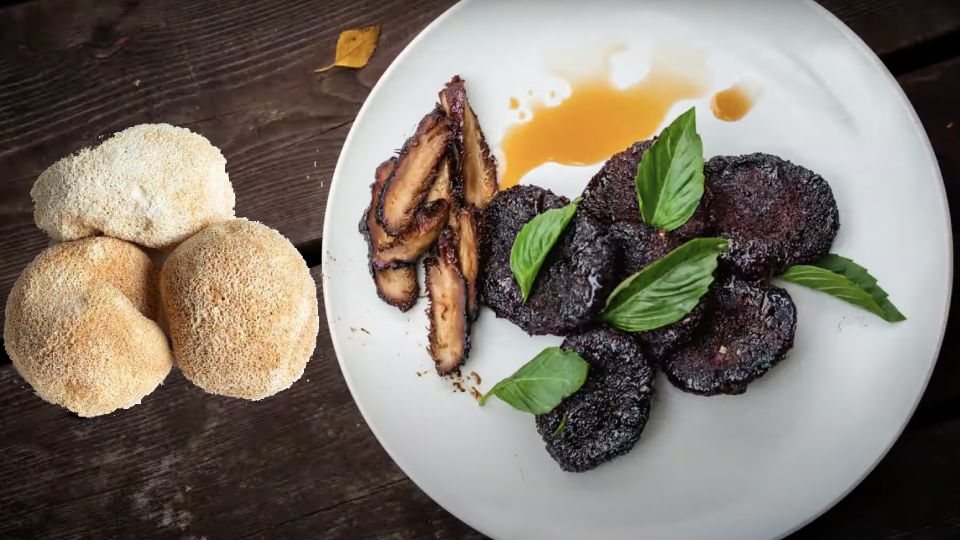
Most people who try lion's mane for the first time expect it to taste like a regular mushroom. That's not what happens. The flavor is closer to crab or lobster than anything earthy. We've cooked through dozens of batches over the years, fresh from grow kits and dried from suppliers, and the seafood comparison holds up every time. It's mild, a little sweet, and takes on a crispy exterior when you get the pan hot enough.
The taste shifts a lot depending on how you prepare it. Raw lion's mane is bland and chewy. Dried is rich and concentrated. The powder form you find in supplements is a different experience entirely. Knowing what to expect from each form matters, especially if you're new to cooking with it or trying to figure out whether supplements are worth the bother.
Key Takeaways
- 1Cooked lion's mane has a mild, sweet flavor often compared to crab or lobster
- 2Raw lion's mane is edible but bland and chewy - cooking improves it significantly
- 3Drying concentrates the flavor into a richer, more umami profile
- 4Lion's mane extract powder tastes earthy with a slight bitterness depending on the brand
- 5Sautéing in butter gives the best flavor - high heat creates a crispy, golden exterior
What cooked lion's mane actually tastes like
The seafood comparison isn't marketing. There's real chemistry behind it. Flavor analysis of lion's mane fruiting bodies has identified 2-methyl-3-furanthiol as a primary volatile compound - the same character-impact aroma molecule found in cooked crab and shrimp. Meaty, sulfury, unmistakably crab-like. That compound, alongside pyrazines that give a nutty-roasted edge, explains why a well-cooked piece can stop you mid-bite wondering if someone snuck shrimp into the pan.
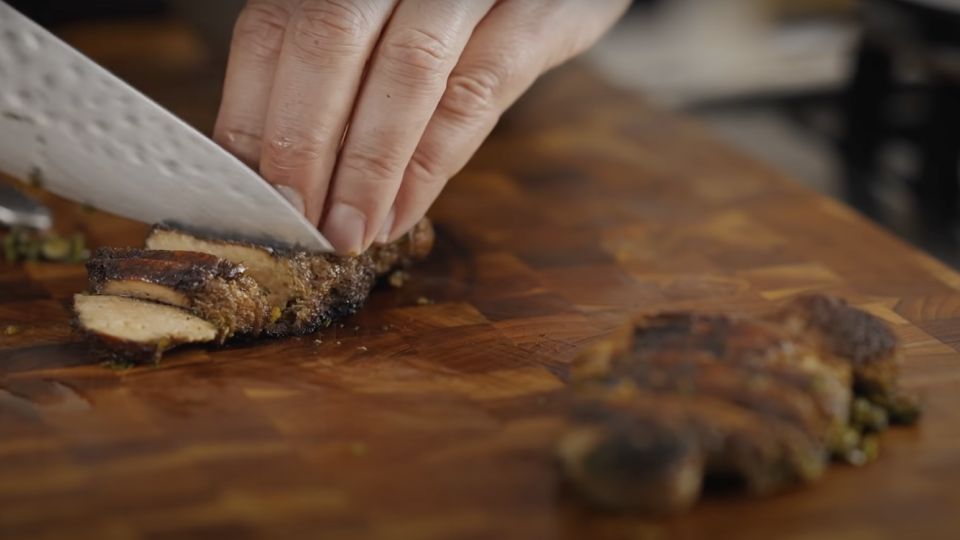
The flavor is mild and slightly sweet, with a gentle earthiness underneath. There's no bitterness when you cook it right. The texture is where it really earns the crab comparison. Heat drives out the moisture and the flesh firms up, pulling apart in chunks that feel a lot like crab meat.
Chef and forager Alan Bergo has described the taste as mild with a texture close to crab. We'd agree, and add that the exterior crisping is what separates a good preparation from a mediocre one. You want that golden-brown crust. It adds a slightly nutty note and a satisfying bite.
Why raw lion's mane is worth avoiding
You can eat lion's mane raw. Plenty of people do. We have, and it's underwhelming.
Raw, the mushroom is spongy and chewy with almost no flavor. It stays bland no matter how you season it before cooking. Raw mushrooms also contain chitin. It's a structural compound in fungal cell walls, and humans don't digest it well. In larger amounts it can cause bloating or mild gut discomfort, particularly in people who are already sensitive to fiber-heavy foods.
Cooking breaks down the chitin and activates the Maillard reaction - that browned exterior is where most of the flavor lives. Raw tastes like damp packing foam. Sautéed in butter tastes like something you'd pay $18 for at a brunch spot.
If the seafood taste isn't for you, supplements are the practical answer. Capsules and powders mask most of the taste and still get you the compounds you're after.
Fresh vs dried
Fresh lion's mane has the pronounced sweetness and the juicy, fibrous texture. If you're cooking it as a centrepiece, fresh is what you want.
Dried lion's mane changes the equation. The drying process concentrates the flavor into something richer and more umami. It loses the juicy quality but gains depth. You can rehydrate dried lion's mane in hot water to bring back some of the original texture. Or you can skip that step and grind it into powder, which is exactly what most extract powders start with.
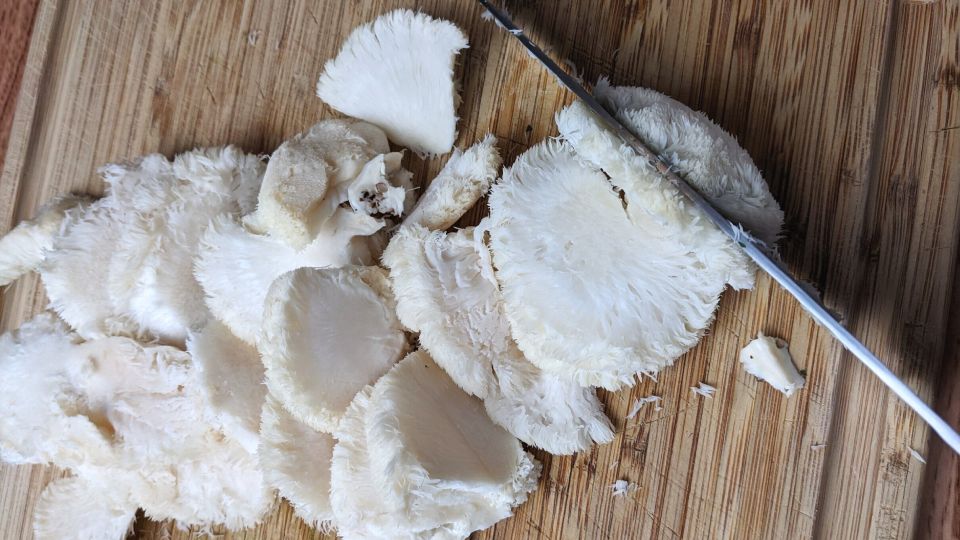
The trade-off is practical. Dried lion's mane has a much longer shelf life, stores easily, and folds well into soups and braised dishes. Fresh lion's mane lasts about a week in the fridge and needs to be used before it starts to go rubbery around the edges.
Not all fresh lion's mane tastes the same. Growth substrate matters. Mushrooms grown on natural hardwood logs tend to have a cleaner, more delicate seafood flavor. Sawdust-block cultivation is more common commercially and generally works well, but can produce a slightly more bitter result. Mycelium-heavy or grain-based production is mainly used for supplements rather than culinary fruiting bodies. Maturity also shifts the flavor. Older fruiting bodies - the ones turning yellow at the edges - develop bitterness and should be used in cooked applications rather than as the star of the dish. Young, bright-white heads are what you want for the best flavor.
What lion's mane powder tastes like
Extract powder is earthier and more bitter than fresh mushroom. The flavor sits somewhere between unsweetened cocoa and dried shiitake, with an underlying woodiness that varies by brand.
We've tried a lot of these. Some brands are noticeably more bitter, likely from lower-quality substrate or incomplete extraction. Others are mild enough that a teaspoon blends into coffee without much impact on the taste. The color also differs. Good dual-extracted fruiting body powder tends to be a darker brown. Mycelium-on-grain products often look lighter and more beige, which matches their generally blander profile.
If you're adding it to drinks, coffee and hot chocolate handle the bitterness better than smoothies or plain water. Cold liquids can bring out the earthy notes in a way that feels off for some people.
How to cook lion's mane well
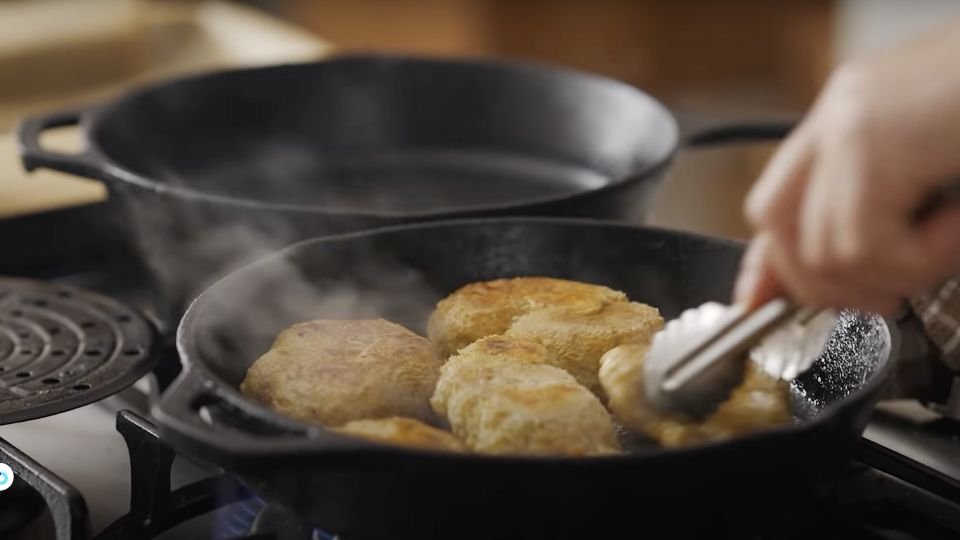
Get the pan hot. Use butter or ghee. Don't touch it.
- Rinse briefly under cold water and pat dry. Do not soak. Lion's mane absorbs water quickly and you'll end up steaming it instead of searing.
- Slice into thick rounds or pull into chunks if the head is large.
- Heat your pan until the butter is foaming. Medium-high works well.
- Press the mushroom down and let it sit for 3-4 minutes per side without disturbing it.
- Season with salt, pepper, and garlic at the end. Early seasoning pulls out moisture.
Roasting is the other method that works well. Slice into rounds, toss with olive oil, salt, and pepper, then roast at 425°F for 15-20 minutes. You get a similar golden crust without having to manage a pan.
Grilling is fine if you brush generously with oil and use medium-high heat. Four minutes per side gets you there. The edges char slightly, which adds a faint smokiness the other methods don't give you.
How to store fresh lion's mane
Put fresh lion's mane in a paper bag, not a plastic container. Paper lets it breathe. Plastic traps moisture and it'll go soggy within a day or two.
It keeps well in the vegetable drawer for up to a week. If you notice the edges getting rubbery or yellow, it's still usable but the flavor will be past its peak. Cook those pieces in a soup or broth where the texture matters less.
Do not freeze fresh lion's mane without blanching first. Raw frozen lion's mane turns mushy when thawed. Give it 2 minutes in boiling water, drop it in an ice bath, then bag and freeze.
One thing to flag if you have a shellfish allergy. The crab-like taste comes from shared flavor compounds, not shared proteins. Shellfish allergies are driven by crustacean-specific proteins like tropomyosin, which lion's mane doesn't have. So the flavor resemblance is not a sign of cross-reactivity. Lion's mane can still cause its own allergic reactions in certain people though - separate mechanism entirely. Anyone with a history of food anaphylaxis should try a small amount first and get a doctor's sign-off before adding it regularly.
Other ways to get lion's mane in your diet
If you like the mushroom but want a more consistent daily dose, powder and capsules are easier to stick with.
Powder goes into almost anything. We add it to coffee, oatmeal, and occasionally a savory broth. Start at half a teaspoon and go up from there. The taste is noticeable but not overpowering in most applications.
Capsules are the most neutral option. No taste at all. They're useful if you're specifically after the cognitive support compounds and don't care about the culinary experience.
Lion's mane tea is another route. Steep dried slices in near-boiling water for 10-15 minutes. The result is mild and slightly earthy. Honey balances it if you find it too flat.
Tinctures have a strong, concentrated flavor from the alcohol base. Some people take them straight. Most add them to water or juice.
Frequently Asked Questions

Gordon is a former high-tech researcher who traded his silicon chips for spores. With a background in molecular visualization, he spends his time mapping the intricate structures of medicinal fungi.
References & Further Reading
- Characteristic Flavor of Volatile Oil from Dried Fruiting Bodies of Hericium erinaceus — ResearchGate (2012)
- Chemistry, Nutrition, and Health-Promoting Properties of Hericium erinaceus — PubMed (2015)
- Volatile flavor behavior characterization of Hericium erinaceus during postharvest storage — Food Chemistry (2024)