 Mushroom Health Hub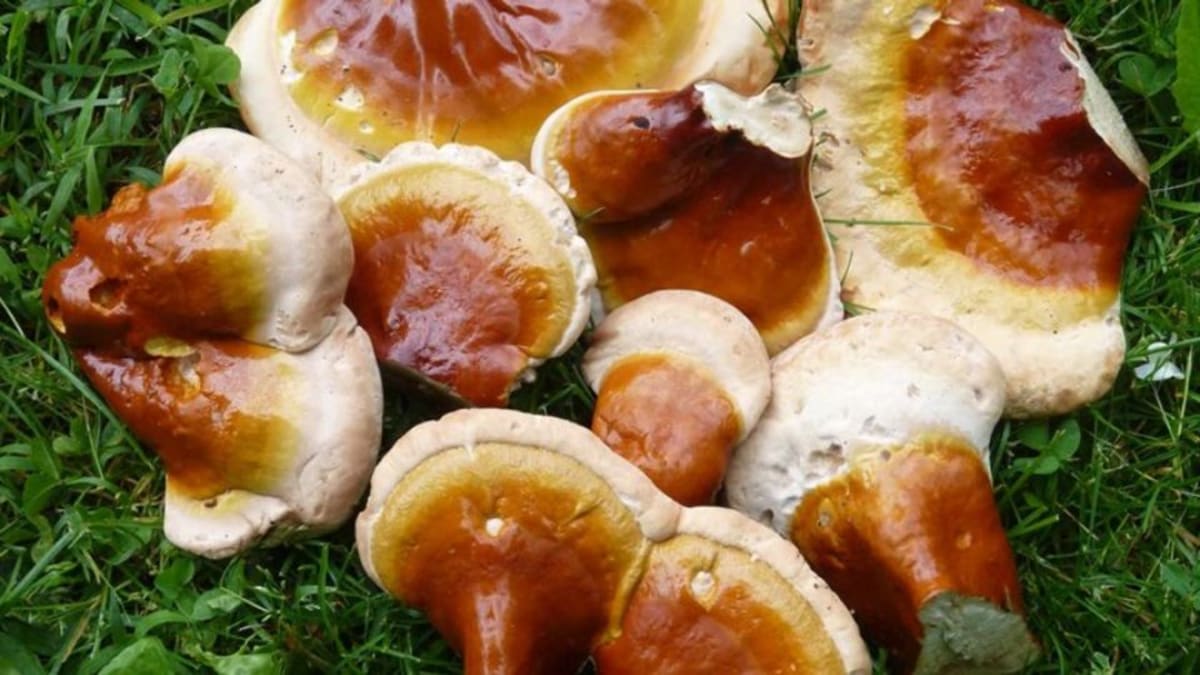
Ganoderma tsugae is a medicinal polypore closely related to true Reishi. We usually call it the hemlock varnish shelf. It only grows on coniferous wood in North America and parts of Asia. While it looks practically identical to Ganoderma lucidum, this fungus relies on a completely different genetic toolkit to survive and thrive in its environment. Foresters spot it easily by that glossy, varnished cap and a stubborn preference for Eastern hemlock trees.
We track the chemical differences driving its medicinal potential in this guide. Clinical data shows tested applications for cognitive health, cellular apoptosis, immune modulation, and tissue regeneration. The research is compelling. Although traditional herbalism treated these varnished fungi as interchangeable for centuries, modern phylogenetic analysis proves that the hemlock-dwelling variant actually possesses a unique biochemical signature capable of supporting human health. We will show you exactly how to pull those target compounds right out of the fruiting body.
Key Takeaways
- 1Ganoderma tsugae diverged from Ganoderma lucidum roughly 21 million years ago and only grows on coniferous wood
- 2A dual hot water and alcohol extraction is required to capture both immune-modulating polysaccharides and medicinal triterpenes
- 3A 2022 animal study found the hot water extract activates the Nrf2 antioxidant pathway and reduced cognitive decline in aging rats
- 4Laboratory research shows the ethanol extract induces apoptosis in metastatic prostate cancer cell lines
The Evolutionary Split
A 2021 genome analysis published in Frontiers in Microbiology revealed exactly when this mushroom became its own distinct species. Researchers found that it diverged from the common ancestor of Ganoderma lingzhi and Ganoderma sinense roughly 21 million years ago. This evolutionary detour gave the fungus some highly specific substrate capabilities. It only grows on conifers. Other medicinal polypores demand deciduous hardwoods. The genetic data maps this preference out perfectly.
Because the genome carries expanded gene families responsible for benzoate degradation and plant pathogen interaction, the fungal mycelium can chew right through the incredibly dense lignin locked inside Eastern hemlock trees. That dietary shift completely alters the chemical makeup of the final fruiting body. The resulting mushroom yields a different ratio of fungal metabolites compared to its hardwood-dwelling cousins, which gives us a highly specialized profile of therapeutic compounds. We see these deviations clearly in the lab.
Foraging and Identification
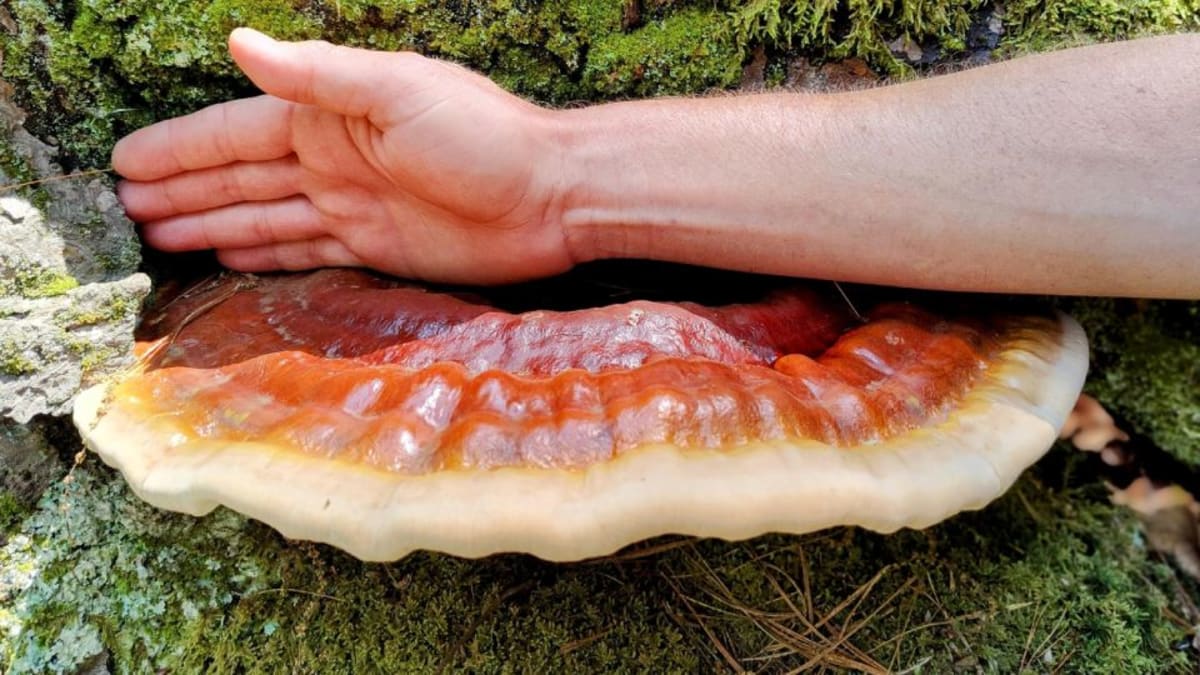
Locating the hemlock varnish shelf means knowing exactly where to look. You will almost exclusively spot this fungus latching onto dead or dying Eastern hemlock trees. The fruiting bodies push out in late spring. They persist through summer. Young specimens look just like irregular white and yellow knobs erupting straight from the bark. Foragers sometimes call this the marshmallow stage because of the soft, yielding texture. As the mushroom matures it flattens into a classic kidney shape with a deeply varnished, reddish-brown cap that feels like polished wood. The underside holds tiny white pores that bruise brown when you scratch them. Fresh specimens carry a faint earthy, slightly sweet smell distinct from other shelf fungi.
While novice hunters routinely confuse this species with other varnished shelf fungi, we easily verify its identity by checking that the host tree is a conifer rather than a deciduous hardwood. True Reishi (Ganoderma lucidum) prefers oak and maple. Out in the Pacific Northwest, Ganoderma oregonense colonizes conifers but produces much larger spores and a dramatically thicker cap. Eastern foragers might stumble across Ganoderma sessile or Ganoderma curtisii, though those species stick to deciduous hosts. Substrate makes identification simple.
Bioactive Chemistry
Two main groups of compounds drive the therapeutic value of this fungus. We are looking at water-soluble polysaccharides and alcohol-soluble triterpenes. A 2022 chemical analysis of the hot water extract identified 3.93 percent polysaccharides and 1.96 percent triterpenes by weight, proving that careful processing of the tough fruiting body yields a highly concentrated dose of active molecules. The raw mushroom is tough. It has a corky texture human stomachs simply cannot break down. We must pull these molecules out using heat and solvents.
Although hot water brewing successfully pulls out those immune-modulating polysaccharides, capturing the medicinal lanostane triterpenoids requires a secondary alcohol soak. These triterpenoids reduce cellular inflammation. Harvest time and growth environment dictate the final concentration of these molecules. We always recommend a dual-extraction method so you capture both compound types. Getting both fractions provides the full spectrum of therapeutic benefits.
Cognitive Protection and Brain Health
Cumulative oxidative stress degrades memory and learning capacity in aging brains. A 2022 animal study published in Evidence-Based Complementary and Alternative Medicine investigated how a hot water extract of this fungus might measurably slow that decline down. Researchers induced accelerated aging in rats using D-galactose. They dosed the animals with the extract to observe the tissue effects. The results demonstrated a clear protective mechanism at work.
It activated the Nrf2 antioxidant pathway. This single trigger lowered oxidative damage across the aging rat tissue. Because the polysaccharides and triterpenes work together to suppress neuroinflammation, the treated animals retained better memory function and showed far fewer signs of cognitive impairment compared to the untreated control group. Our nervous system gets a better chance to maintain healthy cellular function as the years pass.
Prostate Cancer and Anti-Tumor Research
We track several promising trials regarding the effect of this mushroom on malignant cells. Resistance to current therapies remains a massive hurdle when treating lethal metastatic prostate cancer. A 2019 study published in the International Journal of Molecular Sciences tested an ethanol extract of the fungus directly on metastatic prostate cancer cell lines. The data revealed measurable anti-tumor activity. It suppressed the metastatic capability of the cells and triggered caspase-dependent apoptosis.
Researchers discovered that the fungal extract achieved this targeted cell death by blocking signaling pathways that typically allow cancer cells to survive, grow, evade immune detection, and quickly spread throughout the rest of the body. A related 2018 study found that the extract also downregulated the androgen receptor and dropped prostate-specific antigen expression in castration-resistant cancer cells. This does not mean the mushroom cures cancer. It indicates that the triterpene-rich ethanol extract warrants serious clinical investigation for oncology applications. The cellular mechanisms measured in these studies provide a foundation for future human trials.
Skin Wound Healing and Tissue Regeneration
Most medicinal applications focus on extracting the active compounds before throwing away the woody mushroom body. Researchers in Taiwan found a brilliant medical use for that leftover fibrous waste. They developed a weavable biomaterial called Sacchachitin straight from the residual fruiting bodies. This membrane aggressively sped up skin tissue regeneration. In controlled animal models, applying this biomaterial to a standard full-thickness wound resulted in complete tissue closure and healing within 21 days while the untreated control wounds remained entirely open and highly vulnerable to infection.
The fungal membrane functions by decreasing the over-expression of tissue matrix metalloproteinases while simultaneously stimulating vascular endothelial growth factor, which speeds up the migration of fibroblast cells directly to the injury site. It drives faster blood vessel formation and rapid tissue closure. Clinical trials are exploring this material right now. Doctors desperately want to treat chronic human wounds that currently resist standard skin grafting.
Extraction and Preparation Methods
You simply cannot eat the mature fruiting body. The cellular walls consist of rigid chitin our stomachs cannot digest. Processing the mushroom is required to access the beneficial polysaccharides and triterpenes. The standard method is a hot water decoction.
To brew a highly concentrated daily supplement, slice the dried mushroom into thin strips or grind it into a coarse powder before simmering the pieces in water for at least two solid hours. A typical starting ratio is one ounce of dried mushroom per quart of water. This melts the chitin. The intense heat releases those water-soluble beta-glucans straight into the dark, earthy liquid. Pulling out the triterpenes requires soaking the leftover mushroom matter in high-proof alcohol for four to six weeks. Combining the concentrated tea with the strained alcohol tincture gives you a dual-extract. This process captures every fat-soluble and water-soluble metabolite locked in the fruiting body. Some foragers skip extraction entirely and just harvest the white growing edge of very young specimens to sauté like normal culinary mushrooms. That soft tissue only stays pliable for a couple of days before hardening into pure wood.
Safety Profile and Contraindications
We consider this mushroom very safe for general adult consumption when prepared correctly. The ethanol and water extracts show zero toxicity in standard cellular assays. Side effects are incredibly rare. When they happen, they usually involve dry mouth, mild digestive upset, or a fleeting headache. Certain people should absolutely avoid this fungus entirely.
Because the active compounds naturally influence immune responses and blood clotting mechanisms, anyone taking prescription blood-thinning medications or immunosuppressants must consult a primary care physician before using this kind of functional mushroom supplement. The molecules might accidentally amplify the effects of these pharmaceutical drugs and trigger unwanted complications. Pregnant and breastfeeding women should also skip this supplement since targeted safety studies are lacking. Start with a tiny dose. This lets the body adapt and helps gauge individual tolerance before incorporating the extract into a daily wellness routine.
Frequently Asked Questions
Gordon is a former high-tech researcher who traded his silicon chips for spores. With a background in molecular visualization, he spends his time mapping the intricate structures of medicinal fungi.
References & Further Reading
- Frontiers in Microbiology 2021 — Frontiers in Microbiology (2021)
- International Journal of Molecular Sciences 2019 — International Journal of Molecular Sciences (2019)
- Molecules 2018 — Molecules (2018)
- Evidence-Based Complementary and Alternative Medicine 2022 — Evidence-Based Complementary and Alternative Medicine (2022)
- Journal of Biomedical Materials Research 2004 — Journal of Biomedical Materials Research (2004)